 Campellolebias dorsimaculatus, Campellolebias dorsimaculatus, |
History
On March 31, 1988 Gilberto Campello Brasil and Dalton Nielsen did discover this beautiful species along the coastal Iguape county, near Icapara, Sao Paulo State in southeastern Brasil.
All species of this genus live between Sao Paulo and Porto Alegre, an area where temperatures can be lower during winter than more northern habitats
The name refers to the stained coloured (latin= maculatus) dorsal fin on the back (latin= dorsum) of the males.
To my knowledge and as stated in KilliData the species is not available in the hobby anymore. In anature the species status is highly endangered also due to urbanisation of its habitat.
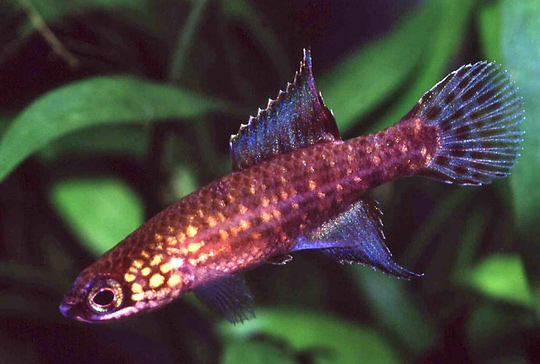
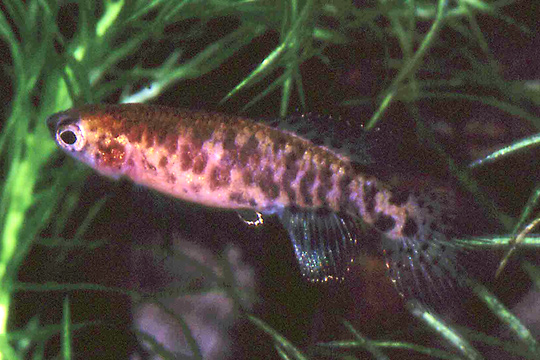
Reproduction
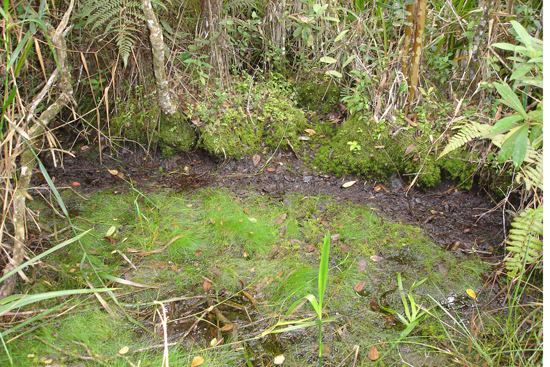
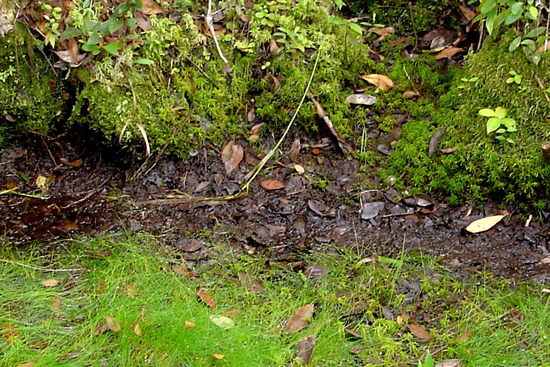
Breeding Campellolebias is for hobbyists with some experience, and results vary. The species lives in primary forest, does not like too much light, and should be kept in low pH values as low as 5 to 5.5 pH. Dark brown water and shelter for the females that are in the breeding setup with one male-only. Males can be very aggressive to other males but to females also. Eggs are fertilized internally by using a gonopodium, which is characteristic of this genus's four known species. As natural annuals, they live in temporary stagnant water near rivers.
After some days, the female drops their eggs freely just above the bottom. These eggs need about 8 - 12 weeks to develop at a storage temperature of about 24 C.. Water temperatures for the fishes should be not too high and can be as low as 18 C. and as high as 26 C. (the latter for short periods).
Growth is very rapidly and reproduction starts at 2 months from day of birth if fed regulary with life artemia and other small life food. Dry food or frozen food is hardly accepted.
Variations
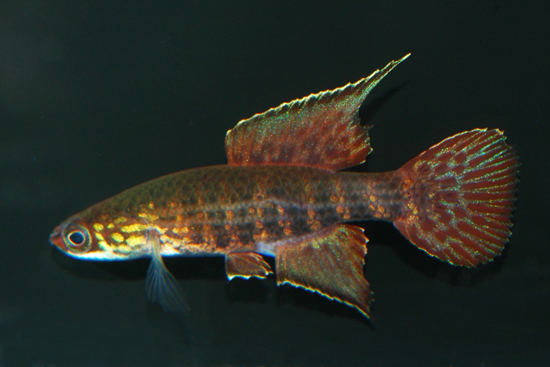
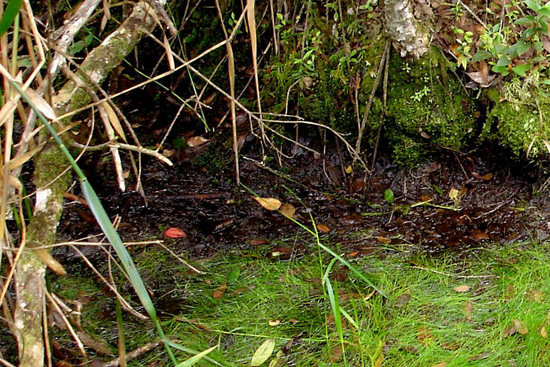
Map
Meristics
Max. size 4.0 cm.
Dorsal 15.0,
Anal 17.0,
D/A -1.1,
LL scale count (average)27.0
Pre- dorsal length to % SL – 52.5 %
Depth to % SL – 26.6 %
Literature