 Rivulus myersi, |
History
Subgenus: Cynodonichthys Meek, 1904
Full name: Rivulus (Cynodonichthys) myersi.
Rivulus myersi was seen as synonyme to C. tenuis but recently the rediscovery of this species revealed it is not synonyme to C. tenuis.
Abstract.
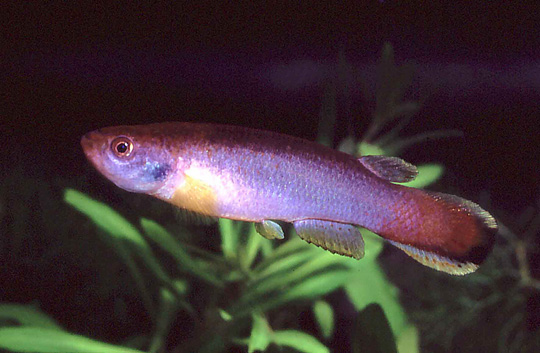
The Cynodonichthys tenuis species group has one of the largest distribution ranges among the Central American rivulids, ranging from the Atlantic slope of southeastern Mexico to Colombia. The enigmatic species Cynodonichthys myersi was described by Hubbs in 1936 from Yucatan. Since then, no further collection of C. myersi specimen has been reported. C. myersi was later considered only a junior synonym of C. tenuis. Here, we report the rediscovery of C. myersi in northern Yucatán mangroves and validate its status as a distinct species through morphological and molecular analyses. The average cytochrome oxidase 1 (cox1) genetic distance between C. myersi and other species from C. tenuis group samples was 8.7%. Our phylogenetic analysis revealed that C. myersi is more closely related to Cynodonichthys species distributed in Panama (Cynodonichthys brunneus, Cynodonichthys weberi, Cynodonichthys montium by _1700 km distant) than to C. tenuis contradicting expectations based on geographic proximity, suggesting independent ancestral dispersal routes between C. myersi and C. tenuis in Mexico. C. myersi can be differentiated by distinct colouration patterns: males exhibit dark spots over the anal fins on iridescent greenish blue (cyan), whereas females display a spotted pattern in caudal fin. The fish were found at the soil-water interface and out of water, revealing a potential amphibious behaviour.
Historically, most non-annual rivulids were classified under Rivulus Poey 1869 until Costa's (2011) revision split the genus into distinct genera: Anablepsoides Huber, 1992, and Laimosemion Huber, 1992, with wide distribution in northern South America, however primarily Amazonian (Costa, 2006; Valdesalici & Gil, 2019; Valdesalici & Nielsen, 2017); Atlantirivulus Costa, 2008, endemic to the coastal Atlantic Forest lowlands of eastern Brazil; Melanorivulus Costa, 2006, with wide distribution in central and northern South America, primarily in the savannahlike Cerrado region; and Cynodonichthys Meek, 1904, distributed in North America (covering southern Mexico), Central America and northwestern South America, including Pacific and Caribbean drainages of Central America (covering Guatemala, Honduras, Belize, Nicaragua, Costa Rica and Panama); river basins west of the Cordillera Occidental;and the hills between the Magdalena and Maracaibo basins in Colombia (including the Magdalena and San Juan river basins). C. tenuis Meek, 1904 (as currently recognized; Huber, 1992), has one of the broadest distributions among Central American rivulids, ranging from the Atlantic slope of southeastern Mexico (including Oaxaca, Veracruz, Tabasco and Yucatan), and Belize, northern Guatemala, to northwestern Honduras. Historically, other populations within C. tenuis range have been described as separate species: Cynodonichthys godmani Regan 1907 from Guatemala, and Cynodonichthys hendrichsi Alvarez and Carranza 1952 from 80 km southeast of Villahermosa, Mexico (Huber, 1992).
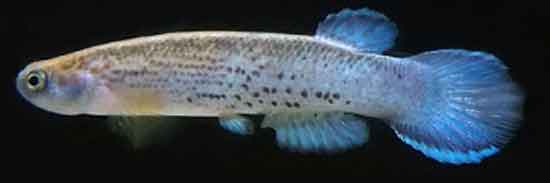
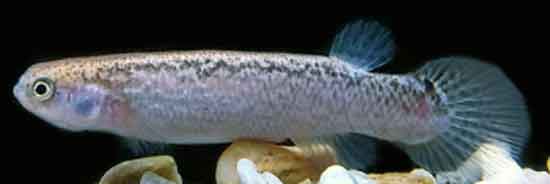
However, the morphological analysis of Miller (1966) and Miller and Carr (1974) concluded that C. hendrichsi and C. godmani were indistinguishable from C. tenuis. However, Costa (2011) considers both species valid. Collier (2016) reestablishes C. godmani as a valid species and describes Cynodonichthys degreefi as a new species. In addition to these closely related species, other species are known to belong to the same C. tenuis species group: Cynodonichthys brunneus, Cynodonichthys frommi, C. fuscolineatus, C. isthmensis, C. monikae, C. montium, C. rubripunctatus, C. villwocki, C. weberi (Costa, 2006; Hrbek & Larson, 1999; Huber, 1992, 2000; Murphy et al., 1999). An enigmatic Cynodonichthys species within the current range of C. tenuis in northeastern Mexico, C. myersi, was described by Hubbs 1936 from a locality near Progreso, Yucatan. Huber (1992) considered C. myersi as another junior synonym of C. tenuis, but that classification was not used by Costa (2011). However, to the best of our knowledge, no C. myersi specimen has been collected or studied since its original description in 1936, so its current taxonomic status remains uncertain. C. myersi, if valid, is not included in fish catalogues of rivulids from North America (Miller, 2009; Espinosa-Pérez, 2014; Uzee-O'Connell et al., 2020; Fricke & Eschmeyer, 2024) nor Yucatan Peninsula (Gallardo-Torres et al., 2012; Schmitter-Soto, 1998). This scenario is most likely caused by the lack of studies in the area and mixed evidence about C. myersi taxonomic status. Given the uncertainty surrounding C. myersi, and its historical discrepancy about its taxonomical classification, the objective of this study was to test the taxonomic status of the Cynodonichthys specimens found in the Yucatan Peninsula, the area from where C. myersi was originally described.
Reproduction
Keeping and breeding is easy but a good cover of the aquarium is necessary because there ability to jump, even true the smallest opening, is unbelievable.
This species can, if there is enough space for them, housed in a tank with more males than one only and several females. If separated before and brought together again however, they can be very agressive to each other and fight to become dominant to others. The best way to have much offspring is to put a pair or an trio in a small tank from 10 liters with a small filter in it or with some airation. On the bottom some peat moss or dark gravel and a floating "mop" to give space for laying there eggs. The fish will, if they become a rich varity of life food, spawn during there whole adult life and produce daily between 5 to 15 eggs.
The eggs should be collected by hand and stored for about 14 days in a small container. Eggs are 1.6 mm and amber colored. It is wise, to add to the water you store the eggs in, some acryflavine to provent fungus coming up.
After hatching the young fry can eat fresh artemia nauplii without any problem. It takes 4 to 5 months to raise them to maturity. Often the number of males is far above the number of females. For some species this can become a major problem for the breeder as he has to raise many young fishes and so become able to distribute a few pairs to other hobbyists. Recent personal tests laerned that lower pH levels during the time of hatching gave a higher percentage of females. To achieve this I use some peat moss that I add to the container with the egss just before they are ready to hatch. This peat moss also is a good way to prevent eggs to become attact by fungusses.
There lifespan can be up to 3 years in captivity.
Remarks :
Variations
Map
Meristics
Max. size 0.0 cm.
Dorsal 0.0,
Anal 0.0,
D/A 0.0,
LL scale count (average)0.0
Pre- dorsal length to % SL – 0.0 %
Depth to % SL – 0.0 %
Literature
Hubbs, C.L. 1936. Fishes of the Yucatan Peninsula. Carnegie Inst. Wash. Pub.., 457: 210, pl. 2.