 Fluviphylax pygmaeus, |
History
Fluvyphilax pigmaeus is described by Myers and Carvalho in: Myers 1955. The describers described it as Potamophylax pygmaeus but this genus name turned out to be pre- occupied by an insect.
Whitley recognized this and re-described the species as Fluviphylax pygmaeus in 1965.
The name pygmeus refers to the very small body lenghth as this species reach a maximum of only 18 mm SL.

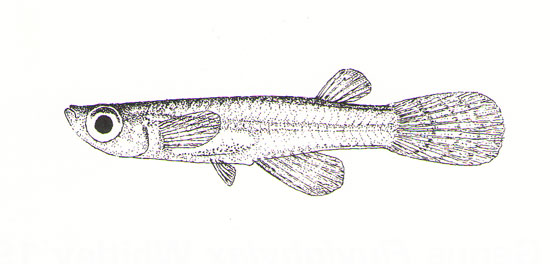
Reproduction
These extremely small fish live in the mouths of smaller steams where they drain into larger rivers. There they form schools of a few thentals that feed at the water's surface on small insects that land on the water to deposit eggs and other floating food. I experienced firsthand how beautifully this species behaves in the wild when I went into the side creeks to look for Rivulus. They swim quietly together but at the slightest danger they shoot in all directions and therefore it is difficult to catch a group. They are very delicate fish that die quickly after being caught if one does not take the proper measures. To transport this species over a longer period, one absolutely must bring clean water as a kind of stock if one wants to keep them alive during the rest of the trip. Packing should be in breathable bags and preferably one fish per bag. For this I used small sealed bags that I have already made upfront for this kind of small delicate fish.
Breeding is not very easy either. The young are extremely small and are best fed with paramecium or other extreme small live food. Artemia will be good for the adults but cannot be eaten by the young. The water should be soft and slightly acidic with a pH of 6.5.
Remarks:
Variations
Map
Meristics
Max. size 1,8 cm.
Dorsal 5-6,
Anal 8,
LL scale count 25-26
Literature
Whitley, G.P. Some fish genera scrutinized. Proceedings of the Royal Society of New South Wales 65: 25.
Myers & Carvalho, in: Myers G.S. 1955. Notes on the classification and names of Cyprinodont fishes. Tropical Fish Magazin, San Francisco, 4 (4): 7.