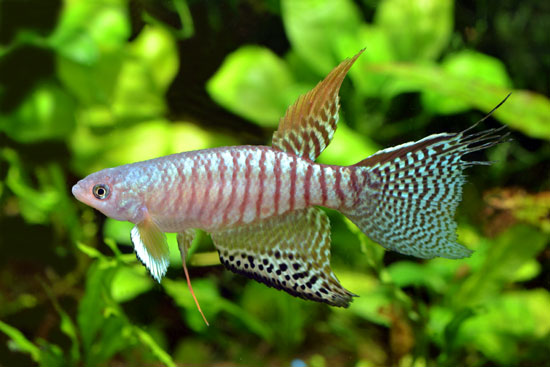
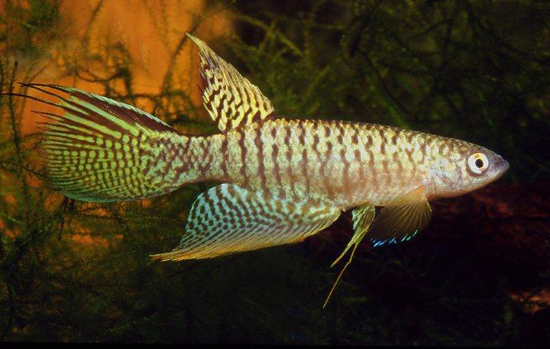
 Gnatholebias zonatus, Gnatholebias zonatus, |
History
Myers described this fish as Pterolebias zonatus in 1935.
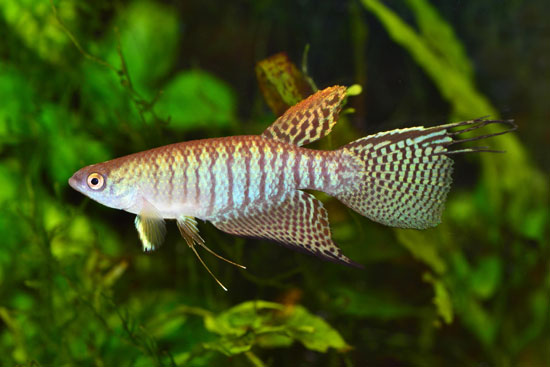
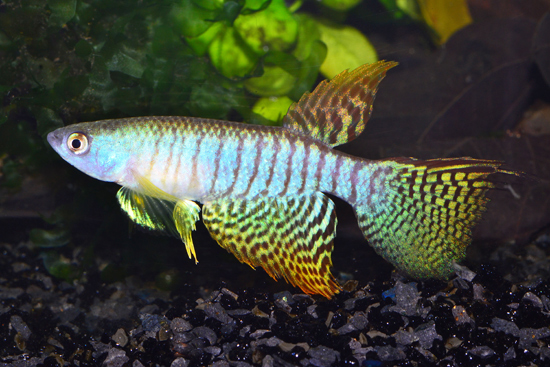
The name was given referring to the zones- or bands in males and females by which this species differs from the other member named Gnatholebias hoignei.
Costa erected the genus Gnatholebias and assigned this species, and Gn. hoignei, to it in 1998.
The species dwells in shaded temporary pools in the Llianos of Venezuelan Orinoco near tributaries of this mighty river and is also reported in Colombia along the Rio Meta as far up as Puerto Lopez.



Reproduction
Gnatholebias zonatus can be found in the temporary pools that are not far from the rivers that are tributaries to the Orinoco River in Venezuela and as reported also in those trybutaries in Colombia.
The habitat is often in open landscape but more often in shaded pools that have muddy bottom. Because of the clay the waters are mostly turbid and the species dives into the substrate to lay their eggs. In sunny places you can see them scooling in the sun at water surface. Often they are found together with Llanolebias stellifer and with Rachovia maculipinnis and sometimes they are reported together with the other Gnatholebias member Gn. hoignei.
Breeding this species is easy but they need lots of live or frozen food to keep them in breeding condition. The species must be kept in aquaria that are not to small, about 50 liter minimum and it is wise to keep more females with one male.
As stated they dive completely into the substrate and for that they need a thick layer of peat or coco peat to dive in. To achieve the full thickness of the length of the fish it is wise to use a deep container with a covered top and an entrance opening at the side that allow the fish to enter. Diving propells the peat up and if no cover is on the top the peat will be spread into the tank leaving the container empty in a day or so. The eggs must be collected every week and stored up to 7-9 months under rather high temperatures. (28-33 C)
Be alert not to leave the peat getting to dry to much and check it so now and than for eggs that can eye- up in an earlier time.
Often sex ratio's are in favour of the males (personal comment by Dr. Bruce Turner) but in the wild often more females can be present.
Variations
Map
Meristics
Max. size 11.0 cm.
Dorsal 11.6,
Anal 22.4,
D/A 9.1,
LL scale count (average)33.6
Pre- dorsal length to % SL – 75.2 %
Depth to % SL – 26.5 %
Literature