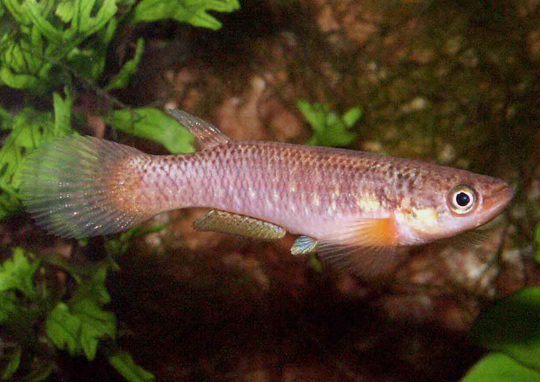
 Kryptolebias sepia, Kryptolebias sepia, |
History
During our expeditions into the interior of Surinam in 2000 (with Siegmund Sladkowsky) and 2003 (with my wife Marjan) we discovered this species in the Tapanahony drainage around Palumeu, a branch from the Marowijne River.
The description followed after the studie of the results of DNA research which proved the link to Kryptolebias brasiliensis and other members of that, recently erected genus by Costa. There is an wide gap between the location we found this species and most other Kryptolebias that live in the souteastern part of Brasil. The only link can be the presence of the marine Kryptolebias marmoratus along the coastline .
It is believed that K. marmoratus is the source of the spreading of this species, perhaps the source of all Rivulus in South America. I also believe that more species will be present and discovered in the enormous area between the group in Brazil and the remote location in Surinam. Only time will prove if this is true.
I also feel that a known species like Rivulus roloffi could belong to the genus Kryptolebias but I do not have scientific evidence of that hypotheses yet.
Reproduction
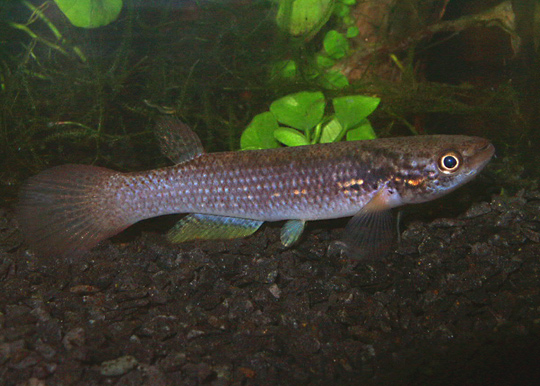
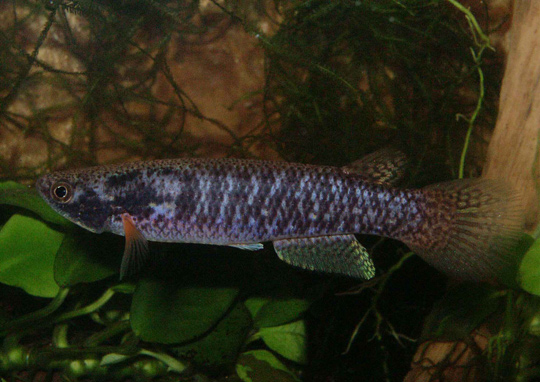
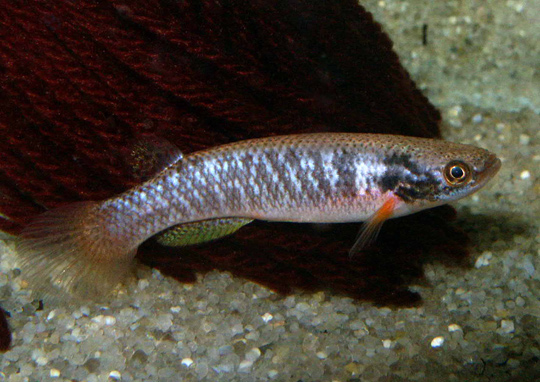
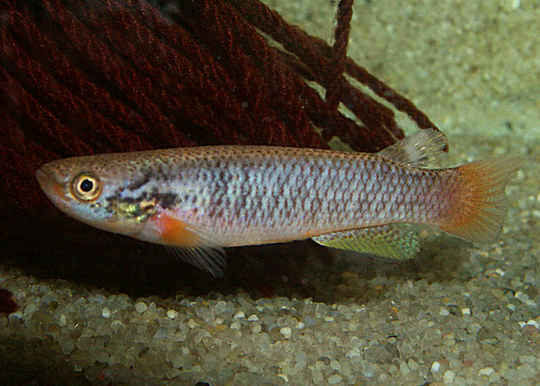
Reproduction was easy but all the young fishes became females, no males were born and raised. The wild fishes lived for about 2,5 years before they died. Unfortunately only one male was among the wild fishes and as said, no males whatever among the offspring. Eggs were large up to 2 mm or slightly more and developed in water within 16 days. Growth was normal for large Rivulus species and they need all types of life food. Frozen food however was also taken, They can reach adulthood than after 5 months.
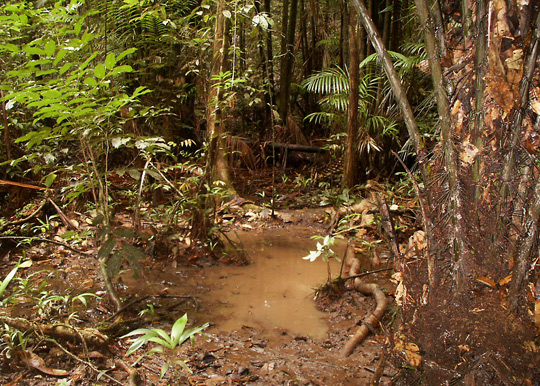
A typical behaviour was that the pairs went almost mad if waterlevel was lowered to a few cm hight. Suddenly the fishes started to spawn and most of the eggs were placed just above the waterline on all type of material, even on top of the kork that held the mops floating. In this way the species take care against predation of eggs. In nature they live always in very shallow parts besides the creeks. Often deep layers of fallen leaves were covering the deeper putholes so that only a few cm of water was above that. In this environment most of the animals were found, together with sometimes Rivulus aff. urophthalmus and mostly with Rivulus gaeyi.
Variations
Map
Meristics
Max. size 6.5 cm.
Dorsal 7.8,
Anal 15.1,
D/A 11.1
LL scale count (average) 39.0
Pre- dorsal length to % SL – 76.6 %
Depth to % SL – 19.9 %
Literature
Vermeulen, F.B.M. & T. Hrbek. 2005. Kryptolebias sepia n. sp. (Actinopterygii: Cyprinodontiformes: Rivulidae), a new killifish from the Tapanahony River drainage in southeast Surinam. Zootaxa, 928: 4, figs. 1-2 (PDF file)