 Rachovia splendens, Rachovia splendens, |
History
The species was described by G. Dahl, in 1958. Dahl described R. splendens after it was discovered November 22, 1956 by W.A. Kyburz in the Sinu river area near Sincelejo. Unfortunately, W.A. Kyburz passed away from a sudden heart attack a short time after making this collection. He was a Swiss national, living in Cali and making a living as a collector of animal and plant specimens.
THe current status of Rachovia splendens is R. brevis (following KilliData 2009, Huber.) In their work "A revision of the South American Cyprinodont fishes of the genera Rachovia and Austrofundulus with the description of a new Genus" published in 1978, Donald C. Taphorn and Jamie E. Thomerson synonymized Rachovia splendens with Rachovia brevis.
They compared the meristics of Rachovia brevis from Fundacion, the terra typica, to samples found south from Barranquilla. Comparisation showed similarities that lead to their conclusion. The area the samples came from however was still Rio Magdalena area and not Sinu river area where the R. splendens is originated.
I do now believe we have to see Rachovia splendens as a species for its own as it shows remarkeble differences to Rachovia brevis in body shape and color. Meristic- and DNA research on the new material should bring this discussion to an end with the rehabilisation of the name Rachovia splendens.
During my first two expeditions thru Colombia (June 2006 and February 2008) I was eager to find R. splendens from its terra typica around the town Sincelejo about 200 km south from Barranquilla. Unfortunately I could not find natural waters in January... only found artificial ones for cattle, full of predetor fishes because of the dry period around January. The fact that the landscape is hilly grassland without cover of trees and other large vegatation force the farmers to collect rainwater as the rainy season is there. In 2006 the rainy season did start late so also that time I could not find natural pools.
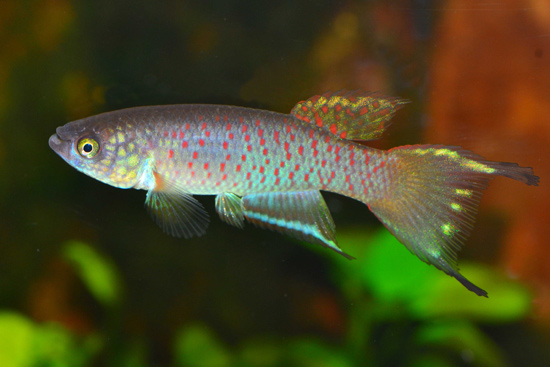
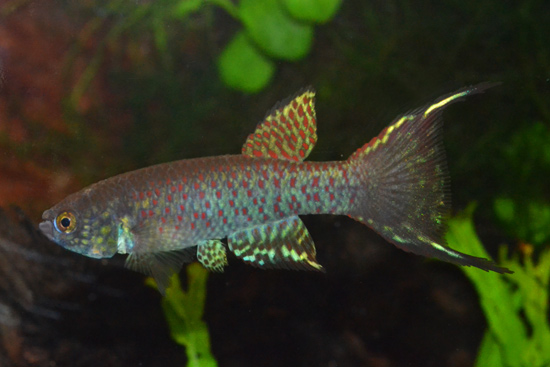
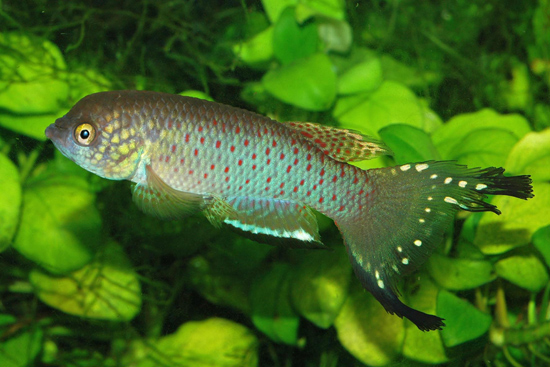
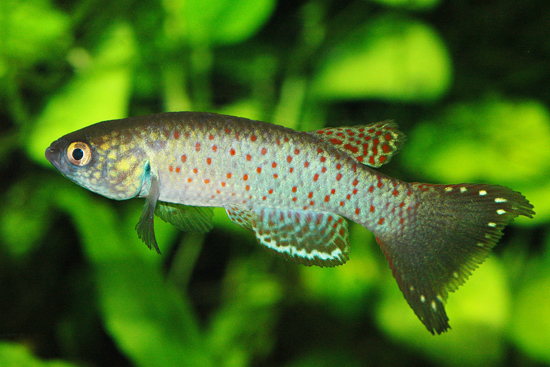
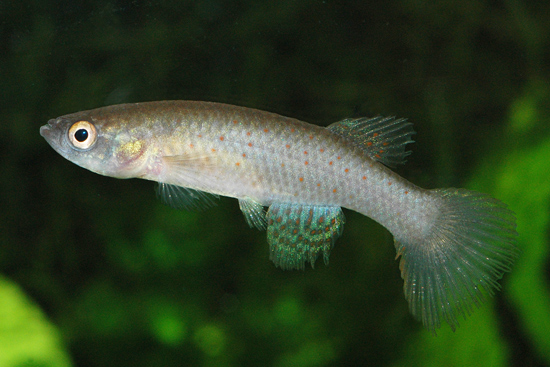
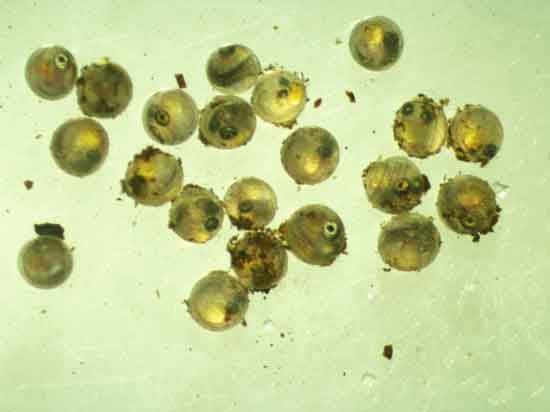
End of July 2009 I went back to Colombia and visited the town Sincelejo and its surroundings again. Near Toluviejo, 16,4 km north from the nabouring town Sincelejo, I was able to recollect this species close to its terra typica in a temporary pool in the Sinu River drainage. See the images above.
Rachovia splendens is different in bodyshape and colouration to Rachovia brevis that is found only in the Rio Magdalena drainage. Remarkable is the sudden change in the shape of the head and the development of extreme long and fringed extensions in the caudal as males become more adult. Click the above images.
Reproduction
Breeding is easy but males can, if before were separated, become very agressive to each other. If males however are many and females also, no fighting among the fishes is seen except for rivals to display their flancs and fins to the .
They are productive and start producing eggs already after 4 weeks of there short live. As typical annual species they can grow very fast and therefore they need a lot of food all the time. They eat all kind of life food but also accept frozen foods.
The species need 2 to 5 months to develop and can also, under very high temperatures (30 or higher up to 35), forced to hatch after 5 to 6 weeks.
Sexes are most of the time in balance but females do grow slower than males and can become prey than.
If someone has hatched many fry it is wise to separate the faster growing animals from the smaller ones because even if fed very strong, predation among fry is regulary the case.
Variations
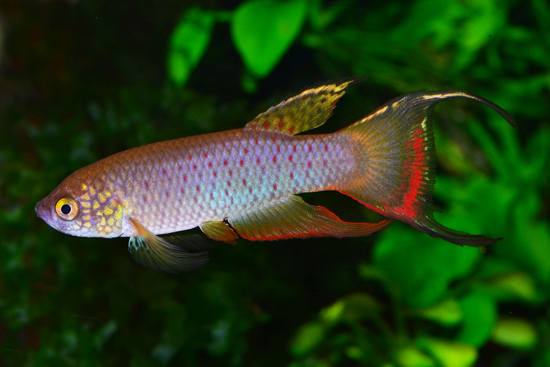

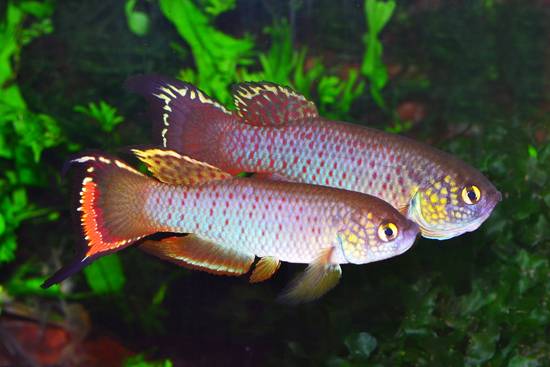
Map
Meristics R. splendens -versus - R. brevis
Max. size 7.0 cm.
Dorsal 00.0,
Anal 00.0,
D/A 0.0,
LL scale count (average)00.0
Pre- dorsal length to % SL – 00.0 %
Depth to % SL – 00.0 %
Dorsal 10.8,
Anal 15.0,
D/A 7.0,
LL scale count (average)30.1
Pre- dorsal length to % SL – 68.5 %
Depth to % SL – 26.7 %
Literature