 Renova oscari, Renova oscari, |
History
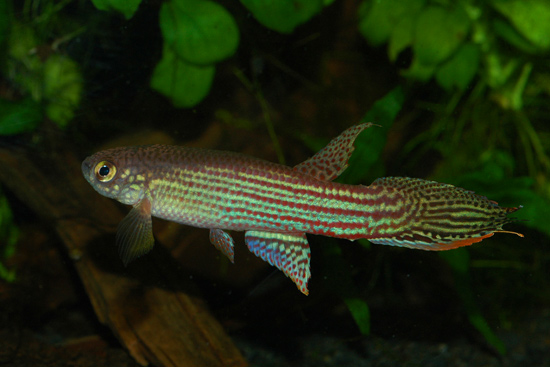
Renova oscari was described by Prof. Jaimie (Jim) Thomerson from the USA and Dr. Donald Taphorn from Guanare, Venezuela in 1995.
This was also the description of the genus itself and Ren. oscari is the monotypic member of this genus so far.
The discovery took place by Oscar Leon Mata, S. Palacios and A. Perez on the 5th of September, 1991. Later, on August 14, 1992 a second group of scientists and aquarist did collect the species again. These were Dr. Donald Taphorn, Dr. Roger Brousseau, J. Rondon and again Oscar Leon Mata. The types were found at Isla Raton, Amazonas, Venezuela an island in the midsection of the Rio Orinoco along the border with Colombia.
The name "oscari" was given in honor of the co- dicoverer of the species Ing. Oscar Leon Mata a Venezuelan scientist.
Huber ( Killi Data Online) states the remarkable fact that 2 monotypic species live at the same spot (Renova oscari and Micromoema xiphophora) that differ so immense from each other in size, colorpattern and body shape. He also suggests there is a relationship of both Genera to the genus Trigonectes.
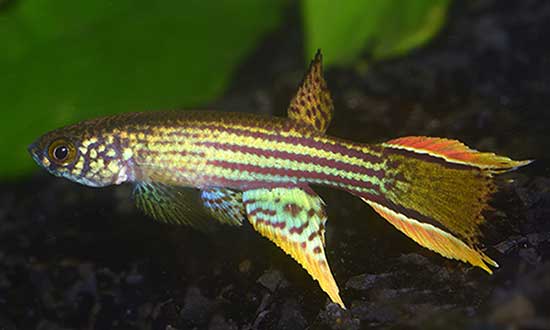
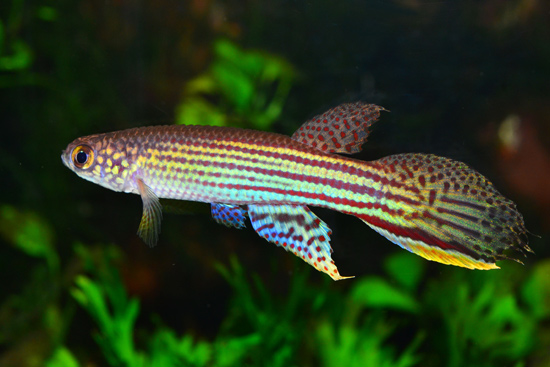
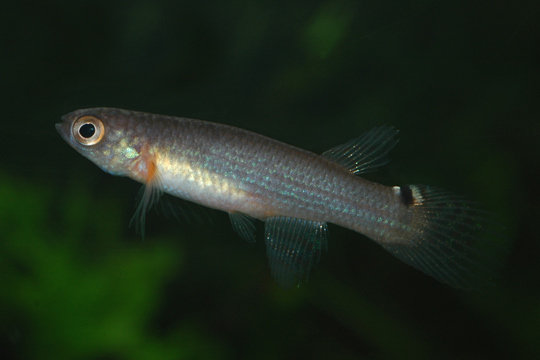
Understanding the distribution and natural occurrence of this genus required new collections in a larger area, and the author found this species in 2015 and 2022 about 600 km away in Central Colombia from the original type locality at Isla Raton in Venezuela.
With that discovery, we have recently greatly expanded the range of their presence.
Reproduction
Breeding Renova is for specialists and even they cannot guarantee the good results. Me included. The problem in my breeding attempts was not the good keeping of the breeding pairs and not collecting enough eggs but to keep the eggs in te peat in good order.
Many times eggs disappeared without any logic explanation. It could be the species eggs are very sensitive for pH levels that are to acid. This however is a gess and not logical also as the species lives in environments that have low pH rates and by that live in acid waters. I have had hundreds of eggs and only few young fishes were the result. It was not that I was not taking care of the peats. I searched the peats every 2 weeks and till the eggs showed eyes all seems to be in good order. Than, before the final day of wetting them they were gone. I inspected the peats on mites and other possible causes of the missing eggs but could not find these treaths.
The amber coloured eggs are large with a diameter of 1.6 mm. They can be seen easely in the peat.
The species has not a violent character and of not separated a while they do not fight each other. Females and males live peacelful and small tanks of 20 ltrs for breeding, even if the species grow big, seems not to be a problem. Of course weekly waterchanges are the best to keep the water in optimal condition for the fishes.
They spawn by diving into the bottomlayer and for the breeder it is case to provide them with a layer of breeding medium with adequate hight.
A high container with top and hole at the side, half filled with peat, that was boiled and rinsed well before use, is ideal for this type of fishes. Eggs need a longer period of incubation so you have to be patient. Incubationtime of 4 months is the minimum up to 7 months depending on temperature and humidity. Very humid peat will result in the total loss of eggs. The humidity of fresh tobacco suits well for this species.
Renova osacari is a wonderful species and worthwile to be kept in our hobby.
Variations



Map
Meristics
Max. size SL 8.0 cm.
Dorsal 10.7,
Anal 14.7,
D/A 8.5,
LL scale count (average)33.2
Pre- dorsal length to % SL – 72.3 %
Depth to % SL – 23.1 %
Literature