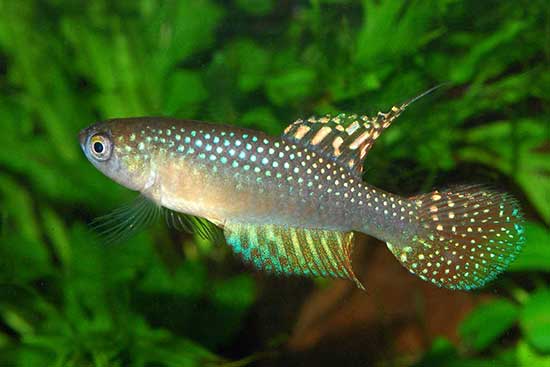
 Ophthalmolebias bokermanni, |
History
Ophthalmolebias bokermanni was first described as Cynolebias bokermanni by Carvalho & Cruz in 1985. Therein the species remained until it was initially assigned to the genus Simpsonichthys (de Carvalho). In 2007, Costa carried out a revision whereby the genus Simpsonichthys was subdivided into then 5 subgenera namely: Ophthalmolebias, Simpsonichthys, Spectrolebias, Hypsolebias and Xenurolebias.
Within Hypsolebias 4 groups were created namely: the S. notatus, the S. magnificus, the S. antenori and the S. flammeus group. This revision was debatable but generally accepted. However, this was not followed by the well-known site "Killi Data" from the French scientist J. Huber and others.
The species got his name in honor of Werner C.A. Bokermann, herpetologist, National Museum of Natural History of Brazil, the discoverer of the species.
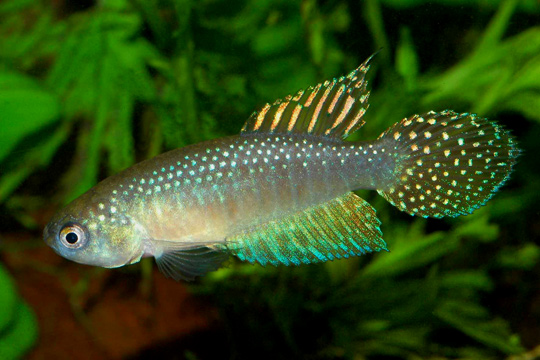
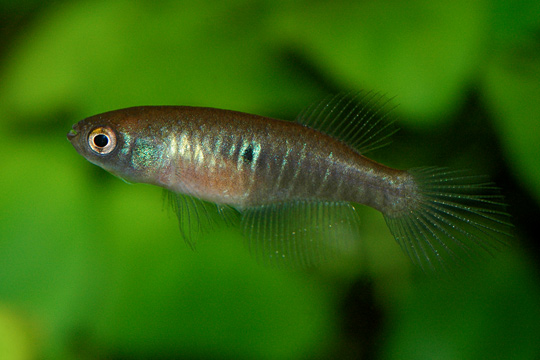
Reproduction
All species of the genus Ophthalmolebias are divers which deposits their eggs in the bottom. The male and female always dive together in the soft clay soil, which we can imitate with a layer of peat on the bottom. As not to need too much peat, place a pot or container in the aquarium with enough peat to ensure that both fish can dive under as a whole. Each egg requires a new dive. The male swirls around the female, trying to entice her to dive with him, after which an egg is laid. At a very young age of about 6 weeks the animals are already able to lay eggs very well and they will do so throughout their short lives if they are sufficiently fed with live food. The incubation period is about 6 - 10 weeks depending on lower or higher temperatures. The species is, like the other species in the genus extremely productive and one should not be surprised if in 1-2 weeks 300 to 400 eggs can be harvested. As I have already indicated in the "Opthalmolebias introduction-page_ atthere lies the danger that the species will be excluded from the stock because enthusiasts are always looking for species that are sort of sparsely available.
This may result finally in unwanted loss of the species in the hobby.
Young grow fast and a group of these beautiful fish is a feast for the eye.
Remarks :
To combat the threat of extinction of species, an international database has been established where the keepers of South American Killifishes, annual- and non-annual Rivulids, can be reported. In this way, one can watch when a species is in danger of disappearing from the hobby or when it is no longer available at the fanciers. This international database can be reached by searching the URL:
https://www.rivulid-conservation.org/
It is possible to enter your species file anonymously or with your name. Please help by participating in this effort.
Variations
Map
Meristics
Max. size 5.0 cm.
Dorsal 14.0,
Anal 21.0,
D/A 6.0,
LL scale count (average)27.0
Literature